
Views: 0 Author: Site Editor Publish Time: 2026-11-13 Origin: Site


Storing emergency food rations in humid marine environments requires more than placing supplies in a ship's storage locker. Moisture, temperature fluctuations, salt-laden air, and damaged packaging can affect food quality during extended voyages. For ship operators and marine procurement teams, a reliable marine emergency food supply plan should combine suitable shelf-stable foods with dry storage, regular inspections, and effective stock rotation.
Ships operate in conditions that differ considerably from land-based warehouses. Storage spaces may be exposed to high ambient humidity, limited ventilation, and temperature changes as vessels travel between climate zones. Even when food is kept below deck, condensation can develop on cooler surfaces or inside poorly protected packaging.
Moisture becomes a particular concern during long voyages, when supplies may remain untouched for weeks or months. Cardboard cartons can soften, metal containers may develop external corrosion, and compromised food packaging can allow contamination or deterioration. A product with a long stated shelf life still needs to be stored under the conditions specified by its manufacturer.
Space limitations add another challenge. Emergency rations often share a vessel's limited storage capacity with other provisions, making accessible shelving, clear labeling, and careful inventory management essential. The goal is not simply to maximize the number of food packages on board, but to keep them protected, identifiable, and available when required.
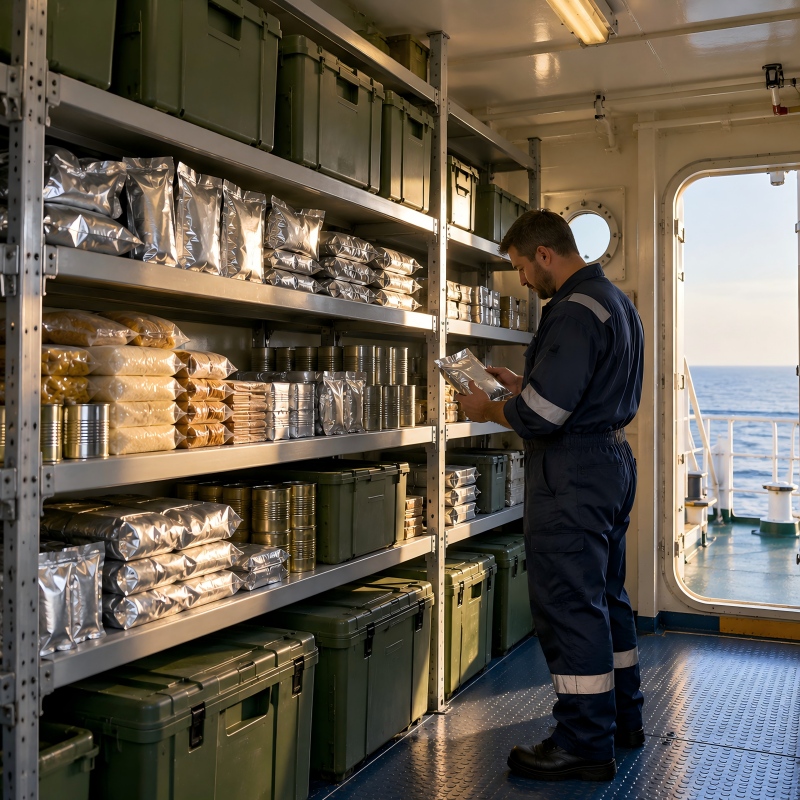
Not all emergency foods respond to marine storage conditions in the same way. Packaging construction, moisture sensitivity, and the type of food inside determine which precautions are most important.
Compressed biscuits and high-energy bars are useful for compact emergency food reserves because they provide energy in relatively small packages. However, the protection they receive depends on the integrity of their individual wrappers, sealed containers, and outer packaging.
For compressed biscuits for ships, moisture exposure becomes a concern when the primary package is punctured, torn, or improperly sealed. High humidity can also weaken outer cartons, making them more vulnerable during stacking and handling. Storage personnel should therefore inspect both the food packaging and the shipping cartons rather than assuming the outer box provides complete protection.
Shelf-stable MRE meals offer a different option for shipboard food reserves, particularly where a more substantial meal is needed. Their packaging is designed for the specific product and processing method, but pouches and cartons can still be damaged by compression, sharp objects, or unsuitable storage conditions.
MRE packages should be kept within the manufacturer's recommended temperature range and inspected for leakage, swelling, broken seals, or other visible damage. Where self-heating meals are selected, their heating components also need to be stored and handled according to the product instructions.
Canned foods can complement a ship's emergency food inventory by offering different meal options and convenient portion sizes. Their sealed construction helps protect the contents during normal storage, provided the containers remain intact and are stored within the stated conditions.
For canned emergency food, external corrosion and physical damage deserve particular attention. Wet storage surfaces may accelerate rusting on susceptible metal packaging, while severe dents or damage around seams can affect container integrity. Bulging, leaking, or otherwise compromised cans should not be used.
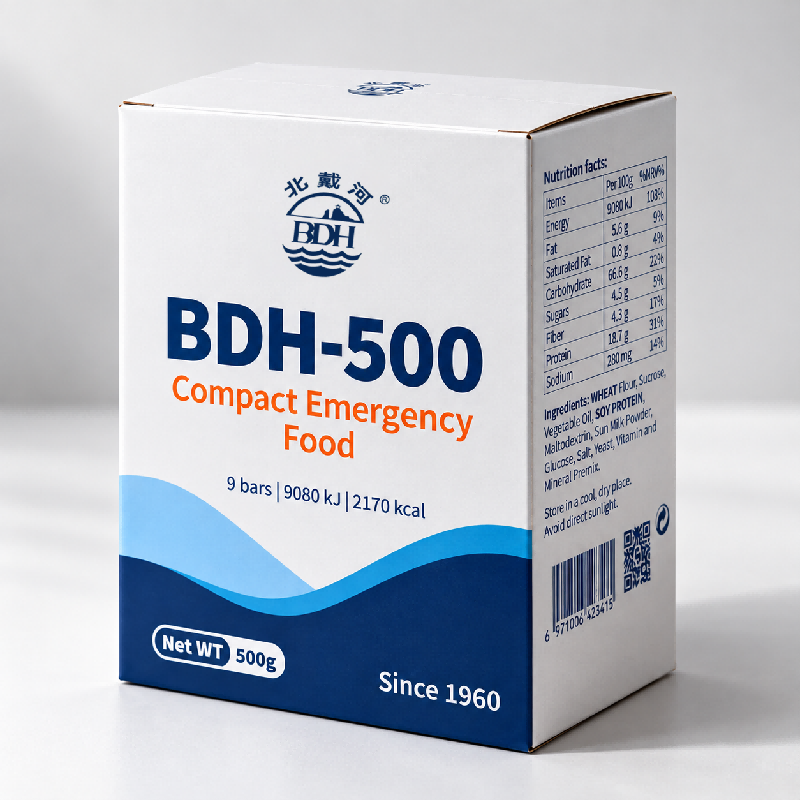
Choosing a suitable storage location is one of the most effective ways to protect emergency rations. A dry, clean, and reasonably cool space is preferable to an area exposed to persistent moisture, heat, or contamination. The storage location should also allow routine inspections without requiring personnel to move large amounts of unrelated equipment.
Food should not be placed directly on the deck. Shelving, pallets, or other suitable supports help reduce contact with surface moisture and make it easier to identify leaks or condensation. Storage spaces should also be separated from cleaning chemicals, fuels, lubricants, and other substances that could contaminate food or damage packaging.
When selecting a location, check the following conditions:
Temperature: Avoid unnecessarily hot areas and locations subject to frequent temperature extremes.
Humidity: Inspect for condensation, damp surfaces, and insufficient air circulation.
Ventilation: Maintain appropriate airflow without introducing additional moisture or contaminants.
Cleanliness: Keep storage areas free from pests, standing water, and unrelated materials.
Accessibility: Ensure emergency stocks remain identifiable and can be retrieved when needed.
Storage cabinets should also be appropriate for the specific purpose of the food reserve. Ordinary backup provisions and regulated survival rations may have different location and accessibility requirements, so the vessel's applicable procedures must be followed.
Humidity cannot always be eliminated from a marine environment, but several practical measures can reduce the likelihood of moisture-related damage.
Routine checks should focus on visible signs of dampness as well as temperature and humidity readings where monitoring equipment is available. Condensation on walls, ceilings, or shelves may indicate that the storage environment requires attention.
Ventilation and humidity control should be appropriate to the vessel's storage arrangement. Simply opening a locker may not improve conditions if the surrounding air is warmer and more humid. Persistent moisture problems should be addressed through the vessel's maintenance and environmental control procedures.
Food packaging should remain in its original sealed condition until the product is needed. Secondary cartons can help organize supplies, but they should not be treated as a replacement for intact primary packaging.
Avoid placing heavy objects on cartons that may crush internal food packages. During loading and inspection, handle supplies carefully to prevent punctures, torn seams, or damaged cans. If the external carton becomes wet, inspect the individual food units before deciding whether they can remain in the reserve.
Raising food cartons above the deck reduces direct contact with surface moisture and allows easier cleaning. Storage arrangements should also leave sufficient access for inspection instead of creating tightly packed stacks that conceal damaged cartons.
Where appropriate, supplies can be grouped by product type, delivery batch, or expiration date. Clear organization helps the crew identify older stock without repeatedly unpacking the entire reserve.
Emergency food supplies should be included in the vessel's planned inspection and inventory procedures. The appropriate frequency depends on the type of reserve, the operating environment, company requirements, and any applicable maritime rules.
An inspection should assess both the condition of the storage area and the food itself. A clean, dry locker is not sufficient if the packages inside have been damaged or the products are approaching their replacement dates.
Inspection Item | What to Check |
|---|---|
Storage environment | Moisture, condensation, cleanliness, ventilation |
Outer cartons | Water damage, crushing, tears, unstable stacking |
Individual packaging | Broken seals, leakage, swelling, punctures |
Canned products | Rust, severe dents, bulging, seam damage |
Product labels | Batch numbers, storage instructions, date markings |
Inventory records | Available quantity, assigned vessel, replacement dates |
Any product showing signs of compromised integrity should be isolated and assessed under the applicable food safety procedures. Visual inspection is useful, but it cannot establish that a damaged food package remains safe to consume.
After severe weather, water intrusion, or an extended period without access to the storage area, an additional inspection may be appropriate.
Long shelf life is valuable for marine emergency food, but the printed date should not be treated as a guarantee under all storage conditions. The product's durability depends on its formulation, packaging, and the temperature and humidity conditions specified by the manufacturer.
A practical approach is First Expired, First Out (FEFO). This means arranging supplies so that packages with the earliest applicable expiration or replacement date are reviewed and issued first. It is more reliable than using delivery order alone, especially when new shipments contain products manufactured on different dates.
Marine operators should maintain a simple record showing the product description, quantity, batch number, date marking, storage location, and next inspection date. Where multiple products have different storage instructions, those differences should remain visible in the inventory records.
Stock rotation also needs to account for the vessel's schedule. A product that remains suitable today may reach its replacement date before the ship's next convenient resupply port. Planning replacement in advance helps prevent emergency reserves from becoming unusable during an extended voyage.
The correct response depends on whether the damage affects an outer shipping carton or the primary food container. A damp cardboard box does not necessarily mean every individually sealed product inside has been compromised. However, damaged primary packaging raises a more serious concern because moisture or contaminants may have reached the food.
When damage is discovered, storage personnel should follow a consistent procedure:
Separate the affected stock from food intended for use.
Record the product name, batch, quantity, and visible condition.
Inspect the individual packages without opening or disturbing intact seals unnecessarily.
Follow the manufacturer's instructions and the vessel's food safety procedures.
Record any discarded stock and arrange replacement when necessary.
Food in leaking, swollen, or otherwise compromised primary containers should not be returned to the emergency reserve. Repacking damaged food into another container does not restore its original shelf life or packaging integrity.
This process is particularly important for ships operating far from their next supply port, where discovering a shortage immediately before an emergency could create operational difficulties.
Storage requirements should be considered when preparing the original food supply plan, not only after the cartons arrive on board. Crew size, voyage duration, reserve period, and available locker space affect both the quantity of food and how it should be packed.
For example, a vessel carrying several categories of shelf-stable emergency food may benefit from separating compact high-energy rations from larger ready-to-eat meals and canned products. This makes stock identification easier and allows different packaging types to receive appropriate handling.
For ship managers and procurement teams, useful planning details include:
Number of crew members covered by the reserve.
Required reserve period and intended use of the food.
Product quantities based on confirmed serving guidance.
Available locker dimensions and environmental conditions.
Replacement dates and the next feasible supply port.
Carton dimensions, labeling, and batch traceability.
These details also help determine whether the selected food assortment is practical for the vessel. A product may be suitable in nutritional or packaging terms but difficult to store if its carton dimensions exceed the available locker space.
For larger operators, emergency food reserve management should account for product durability and future replacement needs as well as the initial order quantity.
Selecting food for a vessel requires balancing storage conditions, expected consumption, nutritional needs, and supply availability. Compressed biscuits, MRE meals, and canned foods can serve different purposes within an onboard food plan, but the actual products should be selected according to their specifications.
Procurement teams should review the manufacturer's storage instructions, ingredients, allergens, shelf life, packaging format, and available documentation. For bulk orders, consistent carton labeling and batch identification can make receiving and inventory control easier.
It is also important to distinguish ordinary shipboard emergency provisions from certified lifeboat or liferaft survival rations. A food product should only be described as meeting a particular marine approval requirement when the necessary documentation for that exact product has been verified.
Qinhuangdao Ocean Food Co., Ltd. supplies shelf-stable food products including high-energy bars, ready-to-eat meals, and canned foods. Its marine supply planning considers vessel requirements, product selection, packaging, and delivery arrangements. Ship chandlers, commercial vessel operators, and offshore fleet procurement teams can contact Ocean Food to discuss suitable products and bulk supply requirements.
Food should be stored according to its manufacturer's instructions, preferably in a clean, dry, and suitable environment. Persistent humidity and condensation can damage packaging and increase storage risks, even for shelf-stable products.
Many commercially packaged compressed biscuits are designed for ambient storage, but the instructions for the selected product should always be followed. Intact packaging and protection from excessive moisture and heat remain important.
Shelf-stable MRE meals may be suitable for shipboard backup food supplies when their specifications, storage requirements, and intended use match the vessel's needs. Their actual durability depends on the selected product and storage conditions.
Follow the applicable product instructions, company procedures, and food safety requirements. Compromised packages should be isolated, documented, and replaced as necessary rather than returned to the active reserve.
Reliable marine emergency food storage depends on the condition of both the food and the space where it is kept. Dry, clean storage areas, intact packaging, regular inspections, and planned stock rotation help protect emergency supplies during long voyages. By considering these requirements before procurement, ship operators can maintain reserves that are easier to inspect, manage, and replenish when needed.