Views: 0 Author: Site Editor Publish Time: 2026-01-22 Origin: Site
Ever wondered how soldiers sustain themselves in harsh conditions? MREs (Meal Ready To Eat)are the secret to their survival. Initially designed for military use, MREs have become essential for outdoor enthusiasts and emergency preparedness. In this article, we’ll explore how MREs are made and why they’re perfect for both military operations and outdoor adventures.
MREs begin with food scientists and chefs developing meals that meet specific nutritional needs. The meals must provide the required calories and nutrients while also maintaining acceptable taste profiles. Typically, military MREs contain around 1400 calories per meal, offering a balanced mix of proteins, fats, and carbohydrates. The food is cooked in large industrial kitchens, ensuring consistency and quality before moving on to the next step in the production process.
Once cooked, the meals are placed into specially designed retort pouches—flexible, multi-layered pouches that seal out oxygen, light, and moisture. This packaging method is superior to traditional cans, as it allows for faster and more even heating during the sterilization process. The retort pouches ensure that the food inside remains safe, free of contaminants, and preserved for an extended shelf life. The compact and flexible design of the pouches also makes them easier to store and carry in various conditions.
Sterilization is a crucial step in ensuring the long shelf life and safety of MREs. After the food is sealed in the pouches, it undergoes a high-temperature sterilization process, often involving boiling for up to 45 minutes. This process kills bacteria, viruses, and microorganisms, preventing spoilage without the need for excessive preservatives. Once sterilized and cooled, the meals are ready for packaging and distribution.

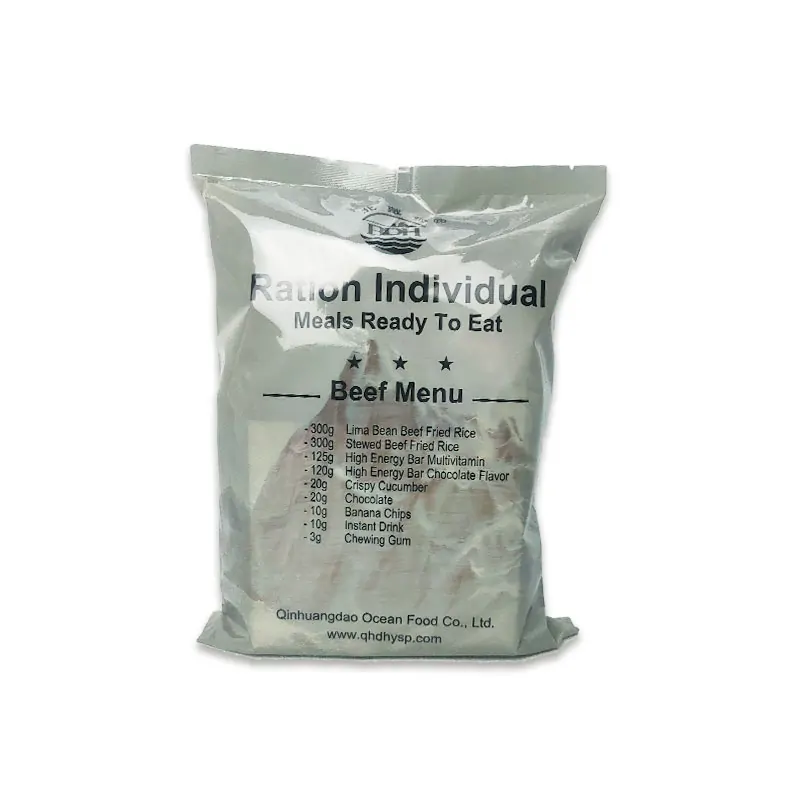
MREs are designed to withstand some of the harshest environmental conditions, making them perfect for military operations. Their rugged, multi-layered packaging protects the food from extreme heat, cold, and moisture. Whether soldiers are in the desert, mountains, or jungles, MREs remain intact and edible, offering reliable sustenance. The packaging is engineered to endure rough handling during transport, ensuring that MREs arrive in optimal condition, even after being subjected to tough conditions.
Portability is one of the standout features of MREs, making them ideal for military personnel on the move. Each meal is lightweight, compact, and easy to store in a soldier's backpack. Moreover, the meals require minimal preparation. MREs can be eaten cold directly from the pouch or heated with a flameless ration heater. This ease of preparation is critical in environments where traditional cooking equipment or open flames are not an option, such as during tactical operations or in hostile environments.
MREs provide soldiers with the necessary energy and nutrition required for long, physically demanding missions. Each meal is carefully designed to provide a balanced mix of calories, protein, fats, and carbohydrates to sustain energy levels over extended periods. MREs typically contain 1400 calories per meal, helping soldiers maintain physical and mental performance throughout their operations. The meals are also fortified with vitamins and minerals to support overall health.
For outdoor enthusiasts, MREs are a game-changer. Their compact and lightweight design makes them easy to carry on hikes, camping trips, or other outdoor adventures. Unlike traditional camping meals, which often require a stove or other cooking equipment, MREs are self-contained and do not need refrigeration. Whether you’re climbing a mountain or camping in the wilderness, MREs provide a practical solution for nutrition without the hassle of cooking.
The simplicity of preparing MREs is another significant advantage for outdoor activities. With just a small amount of water, the flameless ration heater provides a hot meal in minutes. No stove, fire, or complex setup is required, making MREs perfect for remote locations or situations where building a fire is not feasible. The meals can also be eaten cold, making them convenient for those who don’t want to bother with heating at all.
MREs are an essential part of any emergency preparedness kit due to their impressive shelf life. Depending on storage conditions, MREs can last anywhere from three to ten years. This makes them ideal for storing in case of natural disasters, power outages, or other emergencies. Their long shelf life ensures that they remain a reliable food source when other options may not be available.
MREs' extended shelf life is one of their most impressive features. Thanks to advanced food preservation methods, such as high-temperature sterilization and retort packaging, MREs can last for years without refrigeration. This stability is crucial in emergency situations where food resources are limited. The ability to store MREs in disaster preparedness kits for long periods without worrying about spoilage ensures they are always ready when needed.
MREs are designed to perform in a variety of extreme environments. Whether it’s freezing cold, intense heat, or high humidity, MREs remain functional and provide essential nutrition. This versatility makes them ideal for military operations, outdoor survival scenarios, and emergency situations. When traditional food sources are unavailable or impractical, MREs provide a reliable solution.
MREs are specifically designed to be compact and portable, making them an ideal choice for preppers, survivalists, and emergency responders. Their minimalist design means they take up minimal space, making them easy to store in a car, home, or emergency kit. Their compact nature allows for long-term storage and makes them a staple for anyone looking to be prepared for the unexpected.
| Key Feature | MREs | Canned Foods |
|---|---|---|
| Packaging | Multi-layer flexible pouches, easy to transport and store | Metal cans, heavier and more space-consuming |
| Preparation Time | No cooking required, can be eaten cold or heated with flameless ration heater | Requires heating or cooling, needs a heat source or equipment |
| Nutritional Value | Designed for specific nutritional needs, providing balanced protein, fats, and carbs | High in carbs, lower nutritional balance, relies on preservatives |
| Shelf Life | 3-5 years, depending on storage conditions | Generally 1-3 years, requires refrigeration or light protection |
| Environmental Suitability | Ideal for harsh environments (extreme heat, cold, humidity) | Not suitable for extreme conditions, especially prone to spoilage in high temperatures |
| Convenience | Lightweight, compact, minimal preparation | Heavier, requires utensils and heating equipment |
| Energy Density | High energy density, around 1400 calories per meal | Lower energy density, around 300-600 calories per can |
| Variety | Offers a variety of meals, snacks, and drinks | Typically single meal types, lacks pairing options |
Tip: Due to the design of MREs, which focus on convenience and nutritional balance, they are far superior to traditional canned foods in survival and military operations, especially in challenging environments.
| Key Feature | MREs | Freeze-Dried Meals |
|---|---|---|
| Preparation | Can be eaten cold or heated using a flameless ration heater | Requires water for rehydration, typically needs more preparation time |
| Calorie Density | Higher calorie density, around 1400 calories per meal | Lower calorie density, typically 500-800 calories per serving |
| Convenience | No stove needed, ready in minutes, compact and easy to carry | Requires boiling water for rehydration, takes longer to prepare |
| Shelf Life | 3-5 years depending on storage conditions | 5-7 years, requires proper storage conditions to maintain quality |
| Taste and Texture | Designed to maintain flavor and texture even after heating or refrigeration | Rehydrated meals can sometimes lose texture, but flavors remain intact |
| Energy for Activities | Ideal for high-energy activities, providing quick sustenance | Best for lighter activities, less energy-dense for prolonged physical exertion |
| Storage Requirements | Can be stored at room temperature, requires no special conditions | Needs to be stored in cool, dry places to avoid moisture absorption |
Tip: MREs are better suited for quick, energy-dense meals with minimal preparation, while freeze-dried meals are ideal for lighter activities that allow for rehydration and more preparation time.
When it comes to long-term storage, MREs outperform many other types of field food. Their packaging and preservation methods ensure they can last for years without refrigeration, making them ideal for emergency kits and survival situations. Unlike freeze-dried meals or canned food, MREs do not require large quantities of water for preparation and provide a more complete meal with snacks and drinks included.
The future of MRE packaging looks promising, with innovations aimed at further extending shelf life and improving food safety. New materials and technologies are being developed to enhance the durability of MRE packaging, ensuring it remains intact even under the most demanding conditions. These advancements will help make MREs even more reliable for military, emergency, and outdoor use.
Ongoing efforts to improve the taste and nutritional profiles of MREs are underway. Manufacturers are working to offer a wider variety of flavors, making meals more enjoyable for soldiers and outdoor enthusiasts alike. At the same time, they are incorporating more nutrient-dense ingredients to ensure MREs provide the energy and vitamins required for optimal performance.
There is a growing push toward making MREs more sustainable by using eco-friendly packaging and ingredients. This shift is in response to increasing concerns about environmental impact and the desire for more sustainable food options. As MRE technology advances, it is likely that future meals will be more environmentally conscious while maintaining the same level of convenience, durability, and nutritional value.
MREs (Meals Ready-to-Eat) have evolved from military rations to a critical resource for military operations, outdoor enthusiasts, and emergency preparedness. With their long shelf life, ease of portability, and minimal preparation needs, MREs offer a reliable and convenient meal solution in remote or extreme conditions. Whether for military personnel on the move or adventurers in the wilderness, MREs provide vital sustenance when traditional cooking options are unavailable. In addition to their remarkable durability and versatility, MREs are a reliable choice for emergency preparedness. Companies like Qinhuangdao Ocean Food Co., Ltd. offer high-quality MREs that meet both nutritional and convenience requirements, ensuring that users have access to dependable, nutritionally balanced meals wherever needed.
A: MREs (Meals Ready-to-Eat) are self-contained, portable meals designed for military and outdoor use. They are made by cooking meals, packaging them in retort pouches, and sterilizing them through a high-temperature process to ensure long shelf life without refrigeration.
A: MREs are ideal for military use due to their durability, portability, and minimal preparation requirements. They provide essential nutrition and energy, are easy to carry, and can be eaten cold or heated using a flameless ration heater in extreme conditions.
A: MREs can last from 3 to 5 years, depending on storage conditions. Their shelf life is extended due to the advanced packaging and sterilization methods, ensuring that they remain safe and nutritious for extended periods.
A: Yes, MREs are perfect for outdoor activities like hiking and camping. They are lightweight, easy to carry, and require no cooking equipment, making them a convenient food option for remote and rugged environments.
A: MREs offer higher calorie density, faster preparation, and don’t require rehydration. Freeze-dried meals, on the other hand, need water to rehydrate and usually have a lower calorie count per serving. MREs are more convenient for quick meals in outdoor settings.
A: Yes, MREs are an excellent choice for emergency preparedness. With their long shelf life, compact size, and minimal preparation required, they provide a reliable food source during power outages, natural disasters, or other emergencies.


