Views: 0 Author: Site Editor Publish Time: 2026-05-29 Origin: Site
In recent years, global climate change has continued to intensify, triggering frequent outbreaks of extreme weather events worldwide. Extreme heat, severe floods, prolonged droughts, wildfires and strong typhoons have not only seriously threatened human life and property, but also continuously impacted the global food supply chain and disrupted the normal operation of society. At the same time, overlapping problems such as geopolitical conflicts, energy shortages and grain yield reduction have continuously increased the pressure on global food security and emergency support.
Against this backdrop, emergency foods that adapt to extreme scenarios, allow long-term storage, and feature portability and high efficiency have become a key research focus in the field of global disaster prevention and mitigation. As a classic functional emergency food, emergency food ration are widely used in disaster emergency rescue, extreme field operations, military strategic reserves, ocean navigation and other scenarios due to their core advantages of high calorie density, long shelf life, easy transportation and ready-to-eat performance. In the era of normalized global climate crises, the application value and strategic significance of emergency food ration have become increasingly prominent.
Affected by continuous global warming, the stability of the global climate has declined significantly, and regional extreme disaster weather occurs frequently with the characteristics of wide coverage, high intensity and long duration. Many countries in Europe and Asia suffer from persistent extreme high temperatures throughout the year; flood disasters repeatedly hit Southeast and South Asia; many African countries are trapped in long-term drought and intensified land desertification; wildfires in North America and Australia occur frequently with expanding burning areas year by year.
Various extreme disasters easily cause regional traffic interruption, power system paralysis and logistics supply chain breakdown, resulting in short-term shortage of food materials in disaster-stricken areas and making it impossible for residents to obtain stable and safe food supply, which puts forward extremely high requirements for the rapid supply capacity of emergency food.
Climate change has fundamentally damaged the global agricultural production system. Problems such as extreme high temperature, water resource shortage and rampant plant diseases and insect pests have increased the risks of grain yield reduction and decreased crop quality in many countries. Coupled with factors such as geopolitical conflicts, rising energy prices and shortage of agricultural materials, global grain prices fluctuate sharply, and some countries and regions are facing food shortage crises. In this context, emergency reserve foods that require no cold chain, are durable in storage and easy to deploy have become an important supplement to ensure regional food security.
The frequent occurrence of natural disasters has prompted governments of all countries and international rescue organizations to continuously upgrade the standards for emergency material reserves. Emergency food adapted to disaster scenarios must meet four core conditions: long storage cycle, rapid energy supplement, portability and easy transportation, and no need for complex cooking conditions. The product characteristics of emergency food ration perfectly meet all the requirements of modern emergency rescue, making them a core category in the global emergency material reserve list.
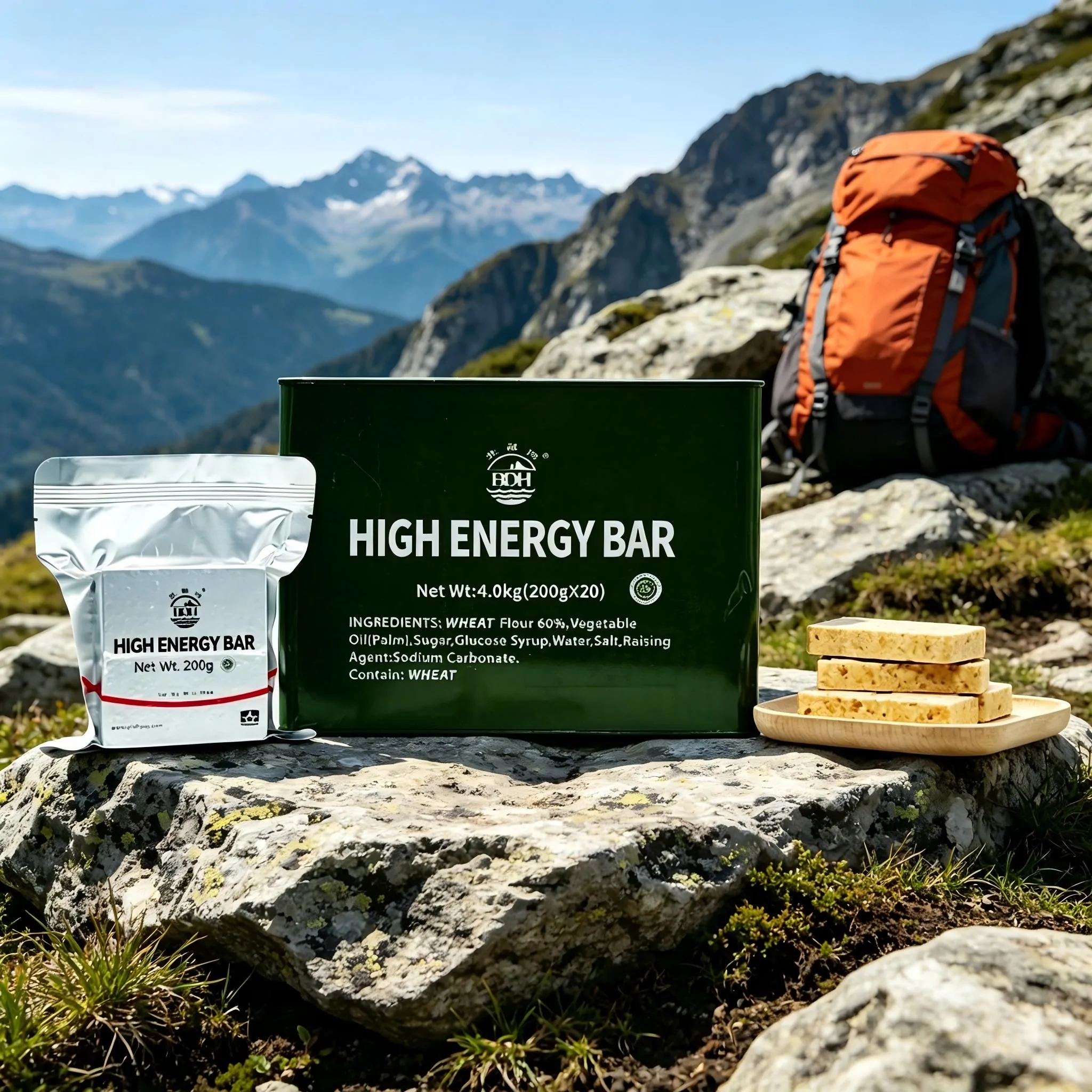
Emergency food ration are high-density functional foods made of wheat flour, white granulated sugar, edible oil and fat, dairy products and other core raw materials through low-temperature compression technology. Developed for emergency, outdoor and special operation scenarios, they have prominent core advantages and are adaptable to various extreme environments.
Emergency food ration reduce volume and concentrate nutrition through compression technology, with much higher calories per unit volume than ordinary foods. A small amount of consumption can quickly supplement the energy consumed by the human body, effectively relieve fatigue, and maintain basic physical strength and mobility in extreme disasters and high-intensity operation scenarios.
Adopting low-moisture formula and sealed moisture-proof packaging, emergency food ration fundamentally avoid mildew, moisture deterioration, spoilage, insect infestation and other problems. They are not affected by complex environments such as high temperature, dryness and humidity, and can be stored stably for a long time, perfectly suitable for household reserve, strategic warehousing, field storage and other scenarios.
Compared with traditional staple foods and emergency foods, emergency food ration are light in weight, small in size and easy to stack, which greatly saves warehousing and transportation space, and reduces the human and material costs of material transportation in disaster areas, outdoor operation carrying and military material deployment.
Emergency food ration require no fire heating, cooking or supporting water and kitchen utensils. They can be eaten directly without power and water supply and basic infrastructure, making them one of the most efficient energy-supplying foods in sudden disaster scenarios.
After sudden disasters such as earthquakes, floods, typhoons and landslides, regional road damage, logistics interruption and paralyzed living facilities make fresh food, cooked food and cold chain food undeliverable. With the advantages of easy transportation, rapid distribution and instant energy supply, emergency food ration become one of the first emergency materials delivered to disaster-stricken areas, providing basic energy guarantee for affected people and rescuers and supporting short-term survival and rescue work after disasters.
With the increasing exploration and development of extreme regions by humans, desert exploration, polar scientific research, field construction, long-distance hiking and other outdoor activities are growing day by day. Such scenarios are generally characterized by harsh environments, difficult supply and irregular diet. The characteristics of emergency food ration, including durable storage, high satiety and light portability, can provide continuous and stable energy supply for outdoor operators and solve the core diet problem in the wild.
At present, the global geopolitical situation is complex and the uncertainty of climate risks is increasing, prompting all countries to attach great importance to the construction of strategic grain reserves. As a necessary military ration, emergency food ration can meet the dietary needs of military field training, mobile deployment and emergency operations. Meanwhile, they are included in the national strategic reserve system, becoming an important grain guarantee to cope with climate disasters, sudden public incidents and geopolitical crises.
In scenarios such as ocean shipping, deep-sea fishery and cross-regional long-distance transportation, the food storage space is limited, the supply cycle is long, and the environmental humidity is high, making ordinary foods perishable. Emergency food ration feature stable storage, small floor space and strong endurance, which can effectively reduce the pressure of food reserve in long-term navigation and ensure the daily energy supply of operators.
Traditional emergency food ration focus on high calorie supply with a single nutritional structure. Future products will break the limitation of single energy supply, optimize the formula system, and add high-quality protein, compound vitamins, dietary fiber, essential trace elements and other nutrients. On the basis of ensuring high-energy supply, they will realize balanced nutrition to meet the health needs of long-term emergency consumption.
Relying on the global low-carbon environmental protection development trend, emergency food ration will gradually phase out traditional packaging materials, promote degradable, pollution-free and low-carbon environmental protection packaging materials, and optimize production processes to reduce production energy consumption and carbon emissions, realizing the full-life-cycle green development of products.
The industry will develop in the direction of refinement and functionalization in the future, developing diversified categories such as anti-fatigue, immunity-enhancing, high-protein, low-sugar and low-fat, and nutrition for special groups. At the same time, it will enrich the flavor system, improve eating taste, break the public's inherent cognition of emergency food ration as rough and single-taste food, and enhance market acceptance among civilian consumers.
Combined with modern technologies such as big data, Internet of Things and smart logistics, countries will build an intelligent emergency food reserve system to realize digital management of the reserve quantity, storage cycle, regional allocation and material scheduling of emergency food ration, and greatly improve the efficiency of emergency response and material guarantee under natural disasters and sudden crises.
In the new era of normalized global climate change, frequent natural disasters and increasing food security risks, emergency food ration have become an irreplaceable functional emergency food with the core advantages of high energy, durable storage, portability and ready-to-eat performance. They can not only efficiently solve the energy supply problems in disaster rescue, extreme outdoor operations, ocean navigation and other scenarios, but also play a vital role in national food security guarantee, strategic material reserve and social emergency system construction.
With the continuous progress of food science and technology and the diversified upgrading of market demand, emergency food ration will achieve comprehensive upgrading in balanced nutrition, diversified functions, green production and intelligent reserve, continuously optimize product adaptability, and provide more reliable support for the world to cope with climate crises, improve emergency guarantee systems and consolidate the food security defense line.
Emergency food ration have multiple advantages including high calories, long shelf life, easy transportation, no cooking required and strong adaptability to extreme environments. After disasters, they can be distributed in batches quickly, and can provide stable energy supply for affected people and rescuers in the first place without relying on water, electricity and kitchen utensils, meeting the core needs of the 72-hour golden rescue period after disasters.
Qualified emergency food ration on the market can be stored for 1-5 years with low-moisture formula and sealed packaging. Stored in a cool and dry place avoiding long-term exposure to sunlight, they can maintain product quality to the maximum extent and are suitable for long-term emergency reserve.
Long-term full replacement is not recommended. Emergency food ration are positioned as emergency reserve, outdoor supply and disaster-specific foods, focusing on rapid energy supply. Traditional products have a relatively single nutritional structure. Long-term single consumption will easily lead to the lack of vitamins, dietary fibers and other nutrients, resulting in nutritional imbalance, so they are only suitable for short-term emergency consumption.


